
Inhouse Drug Rehab: What is it & How can It Help Me?
Drug addiction is a chronic illness that is characterized by intense and overpowering drug craving. It is accompanied by obsessive drug seeking and use behavior that carries on despite consequences that are unsavory and often dangerous. Control over use is quickly diminished and the addiction starts to drive the need and actions of the user. This behavior is largely a result of the effects of sustained drug exposure on the brain and damage done to its operational ability. Addiction is a disease of the brain that disturbs numerous brain circuits. Reward and motivation, learning and memory, and shifts in behavioral inhibitions can be seriously affected by drug addiction.
SAMHSA lists two basic models for the jumping blocks in treatment for drug addiction. A “medical model” of detoxification that is characterized by physicians and nursing staff managing withdrawal with the administration of medication. They also present a “social model” that depends more on a supportive non-medical environment and less on medication for withdrawal.
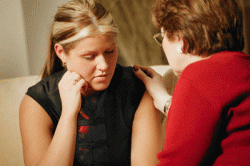
The ‘social model’ allows for a supportive, non-medical method of treatment.
The severity of the addiction often dictates which model appropriately suits the individual addict. However, for addicts, poor choices and a lack of control are already causing harm to their health and lives. So is it a responsible choice, or even a choice that is likely to produce success, to go it alone or only with the help of the untrained and the possibly unreliable? Or does it make better sense to seek help in a setting that has the experience and ability to guide the addict through the hard road of recovery?
Detoxification is defined as a set of intercessions put forth to manage intoxication and withdrawal. Ridding the body of toxins and easing withdrawal symptoms. Detoxification seeks to minimize the physical harm of the patient who is acutely intoxicated and/or dependent on substances of abuse. Though it is a necessity in recovery, the treatment and rehabilitation of substance use disorders cannot be sufficiently treated with detox alone.
The process of detoxification entails:
- Evaluation
- Stabilization
- Fostering
In residential treatment facilities, health professionals involved in the care of the patient utilize every opportunity to promote rehabilitation and maintenance activities in an effort to bolster the good choices being made by the patient in seeking help for their addiction. Connecting the patient with the appropriate substance abuse treatment immediately after the detoxification phase is typically based upon the individual and their addiction. Support systems, such as active family involvement, and backing by friends, are considered positive participatory involvement and are encouraged. Behavioral therapy is offered to help the addict recognize and learn how to handle situations that may threaten the success of their recovery. An opportunity is presented in treatment, to intervene during a time of crisis and to embolden and assist an addict to make changes in their path for health and recovery. In treatment facilities, all aspects of rehabilitation are overseen and nurtured by an experienced, well-trained medical staff.
-
 How is Luxury Inpatient Rehab Different? -
Luxury inpatient rehab is a place where people can go to detox and become free of drug or alcohol addiction in an environment that is lavish and private. Detoxing from a drug or from alcohol will be a stressful experience for a person to go through and can be painful as well. If a person is going ...
How is Luxury Inpatient Rehab Different? -
Luxury inpatient rehab is a place where people can go to detox and become free of drug or alcohol addiction in an environment that is lavish and private. Detoxing from a drug or from alcohol will be a stressful experience for a person to go through and can be painful as well. If a person is going ...
-
 Pros and Cons of Local Drug Rehab Centers -
Local drug rehab centers are often the go-to choice for many individuals who need treatment for drug addiction and abuse. If you choose a local clinic, there are many positive aspects this type of facility, including just being near to your home and loved ones. However, like all treatment types, local drug rehab centers have ...
Pros and Cons of Local Drug Rehab Centers -
Local drug rehab centers are often the go-to choice for many individuals who need treatment for drug addiction and abuse. If you choose a local clinic, there are many positive aspects this type of facility, including just being near to your home and loved ones. However, like all treatment types, local drug rehab centers have ...
-
 Overview of the Types of Inpatient Counseling -
Inpatient treatment centers offer a variety of types of counseling. Since no one type of counseling works for everyone, you need to know which types to take advantage of and which types will work best for you. According the Substance Abuse and Mental Health Services Administration, each type of counseling serves a specific purpose. Individual ...
Overview of the Types of Inpatient Counseling -
Inpatient treatment centers offer a variety of types of counseling. Since no one type of counseling works for everyone, you need to know which types to take advantage of and which types will work best for you. According the Substance Abuse and Mental Health Services Administration, each type of counseling serves a specific purpose. Individual ...
-
 Does Inpatient Drug Treatment Cure Addiction? -
Inpatient drug rehab is an extremely beneficial treatment facility type that allows individuals to stay in a 24-hour controlled environment while they work through their addictions. While inpatient rehab can be very successful depending on the patient’s ability to work toward their recovery and stay in treatment for the appropriate amount of time, it is ...
Does Inpatient Drug Treatment Cure Addiction? -
Inpatient drug rehab is an extremely beneficial treatment facility type that allows individuals to stay in a 24-hour controlled environment while they work through their addictions. While inpatient rehab can be very successful depending on the patient’s ability to work toward their recovery and stay in treatment for the appropriate amount of time, it is ...
-
 10 Reasons to Seek Inpatient Treatment for Drug Addiction Now -
According to the National Institute on Drug Abuse, inpatient treatment is one of the more effective ways to beat a drug addiction. There are many advantages to inpatient treatment that other forms of treatment do not offer. If you are addicted to a drug, inpatient treatment can help you break the cycle of addiction. 1. ...
10 Reasons to Seek Inpatient Treatment for Drug Addiction Now -
According to the National Institute on Drug Abuse, inpatient treatment is one of the more effective ways to beat a drug addiction. There are many advantages to inpatient treatment that other forms of treatment do not offer. If you are addicted to a drug, inpatient treatment can help you break the cycle of addiction. 1. ...