
Inhouse Drug Rehab: What is it & How can It Help Me?
Drug addiction is a chronic illness that is characterized by intense and overpowering drug craving. It is accompanied by obsessive drug seeking and use behavior that carries on despite consequences that are unsavory and often dangerous. Control over use is quickly diminished and the addiction starts to drive the need and actions of the user. This behavior is largely a result of the effects of sustained drug exposure on the brain and damage done to its operational ability. Addiction is a disease of the brain that disturbs numerous brain circuits. Reward and motivation, learning and memory, and shifts in behavioral inhibitions can be seriously affected by drug addiction.
SAMHSA lists two basic models for the jumping blocks in treatment for drug addiction. A “medical model” of detoxification that is characterized by physicians and nursing staff managing withdrawal with the administration of medication. They also present a “social model” that depends more on a supportive non-medical environment and less on medication for withdrawal.
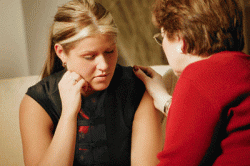
The ‘social model’ allows for a supportive, non-medical method of treatment.
The severity of the addiction often dictates which model appropriately suits the individual addict. However, for addicts, poor choices and a lack of control are already causing harm to their health and lives. So is it a responsible choice, or even a choice that is likely to produce success, to go it alone or only with the help of the untrained and the possibly unreliable? Or does it make better sense to seek help in a setting that has the experience and ability to guide the addict through the hard road of recovery?
Detoxification is defined as a set of intercessions put forth to manage intoxication and withdrawal. Ridding the body of toxins and easing withdrawal symptoms. Detoxification seeks to minimize the physical harm of the patient who is acutely intoxicated and/or dependent on substances of abuse. Though it is a necessity in recovery, the treatment and rehabilitation of substance use disorders cannot be sufficiently treated with detox alone.
The process of detoxification entails:
- Evaluation
- Stabilization
- Fostering
In residential treatment facilities, health professionals involved in the care of the patient utilize every opportunity to promote rehabilitation and maintenance activities in an effort to bolster the good choices being made by the patient in seeking help for their addiction. Connecting the patient with the appropriate substance abuse treatment immediately after the detoxification phase is typically based upon the individual and their addiction. Support systems, such as active family involvement, and backing by friends, are considered positive participatory involvement and are encouraged. Behavioral therapy is offered to help the addict recognize and learn how to handle situations that may threaten the success of their recovery. An opportunity is presented in treatment, to intervene during a time of crisis and to embolden and assist an addict to make changes in their path for health and recovery. In treatment facilities, all aspects of rehabilitation are overseen and nurtured by an experienced, well-trained medical staff.
-
 What Are the Benefits of Female Only Rehab? -
Finding an inpatient rehabilitation center can seem an impossible task. Many believe they can’t make the time or find the money or decide where to go. Among all the decisions that you have to make, you may not have taken much time to consider becoming a patient at a facility dedicated to female-only residents. It ...
What Are the Benefits of Female Only Rehab? -
Finding an inpatient rehabilitation center can seem an impossible task. Many believe they can’t make the time or find the money or decide where to go. Among all the decisions that you have to make, you may not have taken much time to consider becoming a patient at a facility dedicated to female-only residents. It ...
-
 Inpatient Marijuana Rehab Programs -
Are you suffering from marijuana addiction? Has marijuana seemingly taken over your life, leaving a path of destruction, legal problems, and troubles in its wake? Addiction to marijuana is a terrible concern for many, and despite the growing acceptance of marijuana use for both medical and recreational purposes, many have learned the hard way that ...
Inpatient Marijuana Rehab Programs -
Are you suffering from marijuana addiction? Has marijuana seemingly taken over your life, leaving a path of destruction, legal problems, and troubles in its wake? Addiction to marijuana is a terrible concern for many, and despite the growing acceptance of marijuana use for both medical and recreational purposes, many have learned the hard way that ...
-
 How Can I Find Drug Rehabs Near Me? -
Drug addiction takes a toll on the addict, the addict’s loved ones, the workplace as well as the economy as a whole. For these reasons, federal and state governments have gone to great lengths to ensure people in need of treatment can find drug rehab help. How can I find drug rehabs near me? Fortunately, ...
How Can I Find Drug Rehabs Near Me? -
Drug addiction takes a toll on the addict, the addict’s loved ones, the workplace as well as the economy as a whole. For these reasons, federal and state governments have gone to great lengths to ensure people in need of treatment can find drug rehab help. How can I find drug rehabs near me? Fortunately, ...
-
 How to Evaluate an Inpatient Treatment Center -
When you are looking into rehab facilities in general and inpatient centers in particular, it is important to know how to evaluate a treatment facility. According to the National Institute on Drug Abuse, inpatient treatment is a highly successful way to break an addiction. Inpatient treatment offers 24/7 support and a safe place to stay ...
How to Evaluate an Inpatient Treatment Center -
When you are looking into rehab facilities in general and inpatient centers in particular, it is important to know how to evaluate a treatment facility. According to the National Institute on Drug Abuse, inpatient treatment is a highly successful way to break an addiction. Inpatient treatment offers 24/7 support and a safe place to stay ...
-
 How Would I Benefit from Inpatient Treatment Specifically for Men? -
There are a lot of questions you are probably asking about entering rehab treatment for your drug and/or alcohol addiction. Obviously, cost and financing are biggies. Location probably figures prominently into your questions, as well. But, one important aspect of inpatient rehab that you might not be dedicating time to is gender specificity. What is ...
How Would I Benefit from Inpatient Treatment Specifically for Men? -
There are a lot of questions you are probably asking about entering rehab treatment for your drug and/or alcohol addiction. Obviously, cost and financing are biggies. Location probably figures prominently into your questions, as well. But, one important aspect of inpatient rehab that you might not be dedicating time to is gender specificity. What is ...