Does Inpatient Drug Treatment Cure Addiction?
Inpatient drug rehab is an extremely beneficial treatment facility type that allows individuals to stay in a 24-hour controlled environment while they work through their addictions. While inpatient rehab can be very successful depending on the patient’s ability to work toward their recovery and stay in treatment for the appropriate amount of time, it is important to note that addiction is a chronic disease and that there is no cure.
How Can Addiction Be Stopped?
According to the NIDA, “Like other chronic diseases, addiction can be managed successfully.” This is why we say there is really no cure for addiction in the way that we think of one: a treatment is used and the disease goes away forever. There are some individuals who go through inpatient and other types of addiction treatment and never touch the substance they were addicted to again, but this does not mean they were cured. Usually, they would have learned tools for fighting their triggers, cravings, and other issues associated with addiction and may even be managed for a specific amount of time on medications.
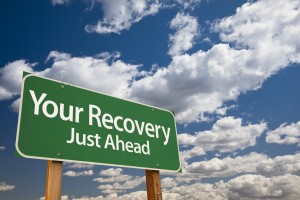
The road to recovery is different for everyone.
Recovery, whether it is achieved in an inpatient drug treatment facility, an outpatient facility, or another way, has mostly the same goals. Different individuals, though, will use different treatments to arrive at their recovery, and they will all likely see their recovery differently and unfolding in unique ways.
- Recovery does not mean the person will never relapse again.
- Recovery does not mean they are completely cured of their addictions.
- Recovery does not mean that they will never feel tempted or have cravings again.
- Recovery means management and long-term health free of illicit and dangerous drug abuse, not exactly the same as being cured.
Does Inpatient Drug Treatment Help People Recover from Addiction?
Many people are able to recover from addiction thanks to inpatient treatment, facilities, and medical professionals, but this type of treatment is not essential for every addict. However, it can be very beneficial toward the recovery of many.
Inpatient treatment helps many people recover from addiction by using specific treatments and techniques such as:
- 24-hour care
- A controlled environment where the person is not forced to deal with triggers out in the world
- Group therapy sessions with other patients who often have similar addictions or personal similarities.
- Some facilities are specifically catered toward the needs of certain groups like women, teens, LGBT individuals, and people living with other mental disorders.
- One-on-one therapy sessions using different methods of behavioral therapy
- Medications “used to help reestablish normal brain function and to prevent relapse and diminish cravings” (NIDA).
- Often holistic approaches like exercise and yoga classes, meditation, nature walks, art and music therapy, or other non-medical treatments that many individuals find helpful
- Family and friend visits and even relationship and family counseling if necessary and applicable
- A time for the individual to reflect on their abuse, recovery, and needs before going back to their daily lives much stronger and, ideally, more healed
With these treatments, inpatient rehab can be very successful and helps many individuals recover from drug addiction. “Most people who get into and remain in treatment stop using drugs, decrease their criminal activity, and improve their occupational, social, and psychological functioning” (NIDA 1). This shows that inpatient treatment, as well as outpatient and other formal treatment types, are very successful.
Should I Attend Inpatient Drug Treatment?
If you are addicted to a substance and are considering whether or not to attend inpatient drug treatment, ask yourself the questions below.
- Do I have a very severe addiction to a substance or more than one substance?
- Am I a constant polydrug abuser?
- Do I believe I would benefit from being in a controlled environment away from my day-to-day life and stressors for a time (at least 90 days for successful treatment according to the NIDA)?
- Am I addicted to a substance that causes intense withdrawal symptoms that can be painful or life-threatening?
- Am I experiencing severe depression as a result of ceasing my drug intake?
- Do I have another concurrent mental disorder such as depression, bipolar disorder, schizophrenia, etc. that has somehow contributed to my addiction?
- Do I live alone?
- Am I without a strong support system of friends and family I can lean on?
- Do I feel that being away from my regular environment will help me in my recovery?
If you said yes to the questions above, you would be a good candidate for inpatient drug treatment. According to the NCBI, “Patients with high psychiatric severity and/or a poor social support system are predicted to have a better outcome in inpatient treatment.” This is common as individuals who experience these issues will have more of their needs met in a facility like this one.
Is Inpatient Drug Rehab Better than Other Types of Treatment?
Inpatient drug treatment is especially well tailored for individuals who have severe addictions, other mental disorders, and/or no strong social support system at home. But mostly, inpatient drug rehab centers are best for the individuals who feel comfortable and that their needs are met while they attend them. “No single treatment is appropriate for everyone,” and you should consider if inpatient drug treatment will meet your needs before you decide what kind of treatment center to attend (NIDA 2).
While inpatient treatment does not cure addiction, it does facilitate recovery and give patients the tools they need to manage their addictions. Over time, it may get easier for you to do so, but addictions don’t ever really go away. If you decide to attend an inpatient treatment facility, you will need to remember these rules of treatment in order to have the most successful recovery possible.
- You must be active and present in your own recovery.
- Relapse does not mean that treatment has failed.
- “Successful treatment for addiction typically requires continual evaluation and modification as appropriate,” meaning you may need to continue other types of treatment after your inpatient stay (NIDA 1).
- Recovery is an everyday process, and inpatient treatment can be one of the stepping stones on your way.
-
 Weighing Pros and Cons of Inpatient Drug Treatment -
Inpatient drug treatment can be extremely effective and beneficial for many individuals who are addicted to one or more substances and want to start their recovery off right. But, like any treatment, there are some drawbacks to this type of rehab. If you are considering attending an inpatient drug treatment and staying at the facility, ...
Weighing Pros and Cons of Inpatient Drug Treatment -
Inpatient drug treatment can be extremely effective and beneficial for many individuals who are addicted to one or more substances and want to start their recovery off right. But, like any treatment, there are some drawbacks to this type of rehab. If you are considering attending an inpatient drug treatment and staying at the facility, ...
-
 What is Four Wall Therapy? -
According to the National Institute on Drug Abuse, inpatient treatment helps you by keeping you out of the environment where the substance abuse occurred. Although inpatient therapy is actually much more than this, there is a part of it that is sometimes known as four wall therapy. Four Wall Therapy Explained Four wall therapy is ...
What is Four Wall Therapy? -
According to the National Institute on Drug Abuse, inpatient treatment helps you by keeping you out of the environment where the substance abuse occurred. Although inpatient therapy is actually much more than this, there is a part of it that is sometimes known as four wall therapy. Four Wall Therapy Explained Four wall therapy is ...
-
 Inpatient Kadian Addiction Treatment Centers -
Kadian, a brand name formulation of morphine, produces powerful pain-relieving effects. Unfortunately, the same mechanisms that work to promote pain relief also produce a range of harmful effects. With morphine being one of the more powerful opiate-based drugs, Kadian likewise carries a high potential for abuse and addiction. Long-time Kadian users eventually reach a point ...
Inpatient Kadian Addiction Treatment Centers -
Kadian, a brand name formulation of morphine, produces powerful pain-relieving effects. Unfortunately, the same mechanisms that work to promote pain relief also produce a range of harmful effects. With morphine being one of the more powerful opiate-based drugs, Kadian likewise carries a high potential for abuse and addiction. Long-time Kadian users eventually reach a point ...
-
 Benefits of Inpatient Drug Rehab -
The benefits of inpatient drug rehab can be seen on every level of the treatment program offering improved physical health, better psychological healing and further emotional well-being. While it may be difficult to make the decision to take yourself away from the everyday routine that you live in or you may not want to leave ...
Benefits of Inpatient Drug Rehab -
The benefits of inpatient drug rehab can be seen on every level of the treatment program offering improved physical health, better psychological healing and further emotional well-being. While it may be difficult to make the decision to take yourself away from the everyday routine that you live in or you may not want to leave ...
-
 Is Luxury Addiction Treatment Really That Much Better than Standard Treatment? -
For those who can afford it, luxury addiction treatment can be highly beneficial to one's recovery.
Is Luxury Addiction Treatment Really That Much Better than Standard Treatment? -
For those who can afford it, luxury addiction treatment can be highly beneficial to one's recovery.